PERS Insurance Explained: What Utah Professionals Need

May 5, 2026

What "PERS Insurance" Actually Means

If you've been searching for PERS insurance and getting confused results, you're not alone. The term "PERS insurance" doesn't refer to a single standardized product — it's an umbrella term used differently by different carriers and brokers. Depending on context, you might see it describe a Professional, Errors, and System coverage bundle, a technology-focused errors and omissions package, or a combined professional liability and cyber product designed for knowledge-based service providers.

What unites all of these uses is the core concept: PERS-type coverage is designed for professionals who can cause financial harm to clients through mistakes, omissions, system failures, or bad advice — even when no physical injury or property damage occurs. Traditional general liability policies (GL) are built around bodily injury and property damage. They don't respond when a structural engineer's miscalculation in a design causes a costly project delay, or when an IT consultant's system migration causes a week of client downtime. PERS-type coverage fills that gap.

In Utah's professional services market — home to a thriving engineering, architecture, technology, and consulting sector along the Wasatch Front — understanding what PERS coverage actually provides (and what it doesn't) is increasingly important. Utah's tech sector in particular has grown significantly in the Salt Lake City corridor and in the Silicon Slopes region of Utah County, creating a large population of professionals with significant errors-and-omissions exposure who don't always have adequate coverage.

Who Needs PERS in Utah

PERS-type coverage is primarily relevant for professionals who provide expertise, designs, recommendations, or systems to clients — where a failure in that expertise or system can cause measurable financial harm. In Utah, the most common buyers include:

  • Civil and structural engineers: Design errors that result in rework, code violations, or structural failures carry enormous liability exposure. Utah's active construction market in Utah County, Davis County, and along the Wasatch Front means Utah engineers face significant project volume and corresponding risk.
  • Architects and landscape architects: Drawing errors, specification mistakes, or code miscalculations can result in expensive change orders, failed inspections, or project restarts. PERS-type coverage through the AIA program or specialty markets is essential.
  • IT and technology consultants: System integration errors, data migration failures, software implementation mistakes, and cybersecurity-related recommendations that prove inadequate all create E&O exposure. Utah's Silicon Slopes is full of technology consultants who need this coverage.
  • Management consultants and business advisors: Advice that leads to financial losses, failed reorganizations, or regulatory violations can produce significant claims even when the advisor acted in good faith.
  • Environmental consultants: Phase I and Phase II environmental assessment errors, remediation recommendations that fall short, or compliance guidance that proves incorrect create long-tail liability exposure.
  • Surveyors: Boundary errors, easement miscalculations, and encroachment issues that surface during real estate transactions generate claims years after the original survey.

The common thread: these are professionals whose primary work product is knowledge, design, or advice — not a physical product. When that work product fails, the client's financial harm can far exceed any physical damage. Standard GL won't respond; a PERS-type or professional liability policy will.

Sole proprietors and small firms are sometimes surprised to learn they need this coverage even without employees. If you bill clients for your professional expertise, you have E&O exposure — full stop. A solo engineering consultant working out of a home office in Provo has the same design liability as a 50-person firm for the projects she signs off on.

How PERS Differs From Standard Professional Liability

Standard professional liability (E&O) insurance covers claims arising from professional mistakes, negligence, or failure to perform professional services to the expected standard. For most professionals, this is the foundation of their coverage. PERS-type products build on that foundation by adding layers that standalone E&O policies may not include.

The key differentiators in PERS-style bundles often include a technology errors and omissions component, which specifically covers losses arising from technology products, services, or systems — even when the professional isn't primarily a technology company but uses technology as a delivery mechanism. A structural engineering firm that delivers designs via a software-as-a-service platform, for example, might have E&O exposure both for the design content and for the platform's availability or data integrity.

Many PERS-style policies also include a systems failure component that responds when a client's operations are disrupted because a system the professional designed, implemented, or maintained goes down. This is distinct from cyber liability — it's about the professional's performance obligation, not about a data breach. An IT consultant who designed a client's network architecture that subsequently failed due to a design flaw would look to this coverage, not a cyber policy.

Some PERS packages also integrate cyber liability as a bundled coverage, recognizing that many professionals who handle client data (engineers with proprietary designs, consultants with financial projections) face cyber risk alongside professional risk. Buying the bundle is often more cost-effective than purchasing each layer separately, and it eliminates the coverage disputes that arise when each carrier argues the loss falls under another policy.

Coverage Pieces: Claims-Made, Tech E&O, Systems Failure, Cyber Bundle

Understanding the structural components of a PERS-type policy helps you evaluate what you're actually buying. Most PERS and professional liability policies for Utah professionals are written on a claims-made basis — meaning the policy responds to claims made during the policy period for incidents that occurred after the retroactive date. This is the same structure used in malpractice insurance, and it carries the same tail coverage implications.

When you change carriers, let a policy lapse, or stop practicing, you need a tail endorsement (Extended Reporting Period) to preserve coverage for claims that arise after the policy ends for prior work. The cost of a PERS tail is typically 150-200% of your annual premium — significant, but essential if you're winding down or transitioning firms. Some carriers offer free tail for retirement after five or more continuous years.

The retroactive date is the date from which your claims-made policy covers prior work. Maintaining continuity of coverage — and preserving your retroactive date — is critical when switching carriers. If you switch to a new PERS carrier and accept a retroactive date of today, you may have no coverage for projects you completed over the past several years. This is a common trap for professionals who shop on price alone without understanding the coverage implications.

Technology E&O coverage is increasingly important for Utah professionals as more deliverables become digital. Even traditional civil engineers now deliver designs in BIM software, conduct virtual site inspections, and provide analysis through cloud-based platforms. Technology E&O ensures your policy keeps pace with your delivery methods.

Systems failure coverage fills the gap between standard E&O and cyber liability. It responds to the professional's failure to design, build, or maintain a system that works as promised — regardless of whether a cybersecurity event occurred. For IT consultants and systems integrators in Utah's technology sector, this is often the most consequential component of a PERS bundle.

What Utah PERS Policies Cost

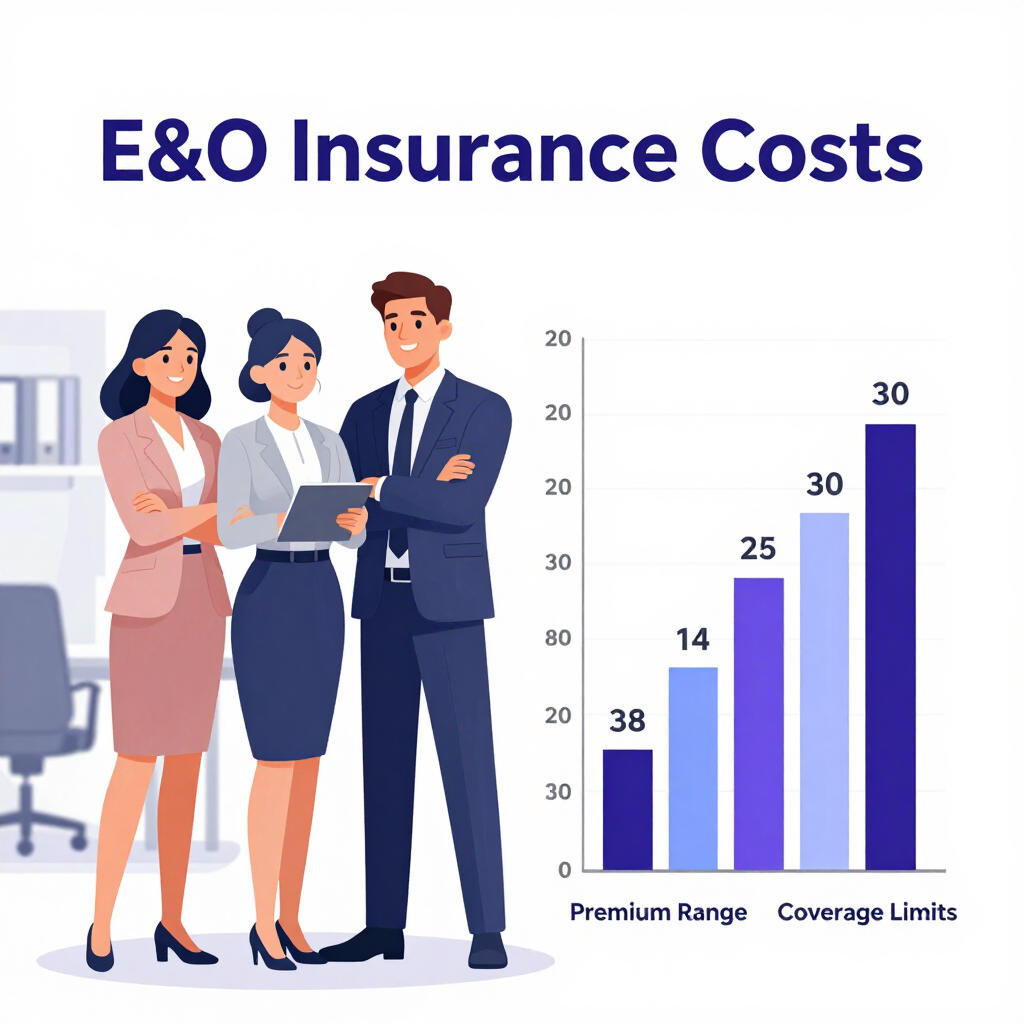
Pricing for PERS-type coverage in Utah depends heavily on your profession, revenue, project types, and claims history. Here are representative annual premium ranges for a $1M per claim / $2M aggregate policy for a small-to-mid-size Utah professional firm:

  • Solo engineering consultant: $2,500–$5,000/yr
  • Small engineering firm (2-10 employees): $5,000–$15,000/yr
  • Architecture firm (small): $3,000–$8,000/yr
  • IT/technology consultant (solo): $2,000–$4,000/yr
  • IT/technology firm (small): $4,000–$12,000/yr
  • Management consultant: $1,500–$4,000/yr
  • Environmental consultant: $3,000–$7,000/yr

Adding a tech E&O component or cyber bundle typically increases premium by $500–$2,500/yr depending on revenue and data exposure. Firms with a history of claims, high-risk project types (hospitals, bridges, high-rises), or government contracts may pay significantly more.

Key pricing factors include annual revenue (the primary exposure base), the types of projects or engagements you take on, the states in which you practice, the size of individual projects (a $50M project has different exposure than a $500K project), and your claims history over the past five years. New firms with no claims history typically receive favorable rates; firms with prior paid claims will pay a loading or face restrictions.

Getting PERS Coverage Through an Independent Agency

Professional liability and PERS-type coverage for Utah professionals isn't sold through most standard insurance channels — it requires access to specialty markets that understand how professional services liability actually works. At The Insurance Center , we're an independent agency serving professionals across Northern Utah, from engineering firms in Salt Lake County to technology consultants in Utah County and architectural firms throughout the Wasatch Front.

As an independent agency comparing 60+ carriers and specialty programs, we can access markets tailored to your specific profession. We work with carriers who write engineers, architects, IT consultants, and management consultants as their core book of business — not as a side product. That means more competitive pricing, better policy terms, and underwriters who understand what you actually do.

We also help you understand the claims-made structure, evaluate retroactive dates before you switch carriers, and ensure your coverage keeps pace as your firm grows or your project mix evolves. For firms that need to bundle PERS with utah pers insurance or stack a professional liability coverage layer above your primary policy, we can structure the program to ensure no gaps. We also coordinate with your utah malpractice insurance for medical pros if your organization crosses into healthcare consulting.

Ready to find out what PERS coverage should actually cost for your practice? Contact The Insurance Center for a no-pressure consultation. We'll review your current coverage, identify any gaps in your professional liability program, and bring you competitive quotes from the markets best suited to your profession and risk profile.

Contact The Insurance Center

1741 N 2000 W, Suite 5 Farr West Utah 84404, United States

A black, minimalist line icon of a telephone handset with a speech bubble above it.

Get A Quote

At The Insurance Center, securing your future is easy. Ready to protect what matters? Contact us for a quick quote and personalized insurance options!

A stylized icon of a person standing next to a shield containing a checkmark, representing security or protection.

Personal Insurance

From auto and homeowners to renters and umbrella policies, we help protect your family and property. Let’s find coverage that fits your life.

A black-line icon of city buildings with a dollar sign coin in front and a shield with a checkmark above.

Commercial Insurance

We customize policies for your industry's risks, like general liability and workers' comp, ensuring you can run your business worry-free.

Share this article

Recent Posts

By Shawn Iverson August 3, 2026
If you haven't called your insurance agent since 2024, there's a decent chance your car insurance changed without you doing anything at all. Utah's minimum car insurance requirements went up on January 1, 2025, under House Bill 113, and most existing policies updated automatically at renewal. That sounds like good news, and mostly it is. But automatic doesn't mean adequate, and a lot of Utah drivers are still carrying coverage that wouldn't come close to covering a serious accident. The short answer: Utah's new minimum is 30/65/25, up from 25/65/15. That's $30,000 in bodily injury coverage per person, $65,000 per accident, and $25,000 in property damage per accident. It's more than before. It's still not much. Here's what actually changed, what it means for your policy, and where the real gaps are. What Utah's Minimum Car Insurance Requirements Actually Are Now Utah's liability minimums rose from 25/65/15 to 30/65/25 when HB 113 took effect January 1, 2025. In plain terms: if you cause an accident, your policy now has to cover at least $30,000 for injuries to one person, $65,000 total for everyone injured, and $25,000 for damage to the other vehicle or property. If you already had a policy before that date, you didn't need to do anything. Insurers were required to bump every existing policy up to the new minimums at its first renewal in 2025. If you haven't shopped your coverage since, your policy is very likely sitting at 30/65/25 right now, whether you asked for it or not. Utah also requires drivers to carry personal injury protection, often called PIP, of at least $3,000 per person. Utah is a no-fault state for medical claims up to that threshold, meaning your own PIP coverage pays your medical bills after an accident regardless of who caused it. Why "Minimum" Doesn't Mean "Enough" The state minimum is a legal floor, not a real estimate of what an accident costs. A single hospital visit after a serious crash can run well past $65,000, and a newer vehicle alone can exceed $25,000 in value before you factor in any other property damage. If a claim against you costs more than your policy limits, you're personally responsible for the difference. That means your savings, your home equity, even future wages can be at risk through a judgment. Utah's new 30/65/25 minimum closes part of that gap compared to the old 25/65/15 standard, but it still leaves plenty of room for a bad accident to outrun your coverage. This is the conversation an independent agent should be having with you at renewal, not just confirming your policy meets the new legal number, but asking whether that number actually protects what you have. What the State Minimum Doesn't Cover: Your Own Vehicle Utah's 30/65/25 requirement is entirely about the damage you cause to other people and their property. It says nothing about your own car. Liability-only coverage means that if you cause an accident, your insurer pays the other driver, not you. Repairing or replacing your own vehicle after a crash you caused requires collision coverage, and comprehensive coverage handles everything else: hail, theft, a deer in the road, a cracked windshield. Neither is required by Utah law. If you're financing or leasing your vehicle, though, your lender almost certainly requires both, and even on a paid-off car, dropping collision and comprehensive to save money can be a costly bet if you can't afford to replace the vehicle out of pocket. The Coverage Most Utah Drivers Don't Realize They Can Reject Uninsured motorist coverage protects you if someone without insurance, or without enough insurance, causes an accident and you're the one left holding the bill. In Utah, it's included in every auto policy by default. You have to reject it in writing, on a form your insurer provides, and that rejection includes a required explanation of what you're giving up. Utah's uninsured driver rate is actually one of the lowest in the country. The Insurance Research Council put it at roughly 6% in its most recent state-by-state study, well under the national average. That's a genuinely good number for Utah drivers. But it's not zero, and it doesn't account for underinsured drivers, people who carry a policy but only at the state minimum. Nationally, the Insurance Research Council found that one in three drivers were uninsured or underinsured in 2023, a combined rate that's climbed 10 percentage points since 2017. If the other driver in your accident is carrying 30/65/25 and the damage is worse than that, underinsured motorist coverage is what closes the gap on your end. If you rejected uninsured motorist coverage years ago to save a few dollars a month, it's worth asking your agent to add it back. The rejection doesn't expire on its own. It stays in place until you request the coverage again in writing. How Much Coverage Should You Actually Carry The honest answer depends on what you have to protect, not what the state requires. A driver with no savings and no home has less financial exposure than a homeowner with equity and a retirement account. Both are legally covered at 30/65/25. Only one of them is actually protected. An independent agent can walk through your specific situation, your assets, your driving history, whether you have teen drivers on the policy, and recommend limits that make sense for you rather than a one-size number set by the legislature. For many Utah homeowners, that conversation also includes an umbrella policy, which extends liability protection well beyond your auto and home limits for a relatively small annual cost. Ask your agent whether it makes sense for your situation. This matters more the more you have. A renter with an older car and no other assets is a very different risk than a homeowner with equity, retirement savings, and a couple of teen drivers on the policy. The state minimum treats both the same. A good agent won't. What Farr West and Heber Valley Drivers Should Do Now Pull out your current auto declarations page and check your actual liability limits. Don't assume your renewal notice caught everything. If you're still showing anything below 30/65/25, your policy is out of compliance with Utah law and needs to be fixed immediately. Beyond compliance, ask your agent two questions: are my limits enough to protect what I actually own, and do I have uninsured and underinsured motorist coverage on the policy. An independent agency like The Insurance Center can walk through both questions and shop your coverage across multiple carriers if your current limits or your current price don't add up. Frequently Asked Questions What are Utah's minimum car insurance requirements in 2026? Utah requires liability coverage of at least $30,000 per person and $65,000 per accident for bodily injury, plus $25,000 for property damage, commonly written as 30/65/25. Drivers must also carry at least $3,000 in personal injury protection. Did my car insurance automatically update to the new Utah minimums? Yes, if you had an existing policy before January 1, 2025, Utah law required your insurer to raise it to the new 30/65/25 minimum at your first renewal that year. Most Utah drivers are already covered at the new limits without having done anything themselves. Can I reject uninsured motorist coverage in Utah? Yes, but only in writing, on a form your insurer provides that explains what the coverage does. Without that written rejection, uninsured motorist coverage is automatically included in every Utah auto policy. What happens if I cause an accident that costs more than my policy limits? You're personally responsible for the difference. A judgment against you can reach savings, home equity, and future wages, which is why many drivers carry limits well above the state minimum or add an umbrella policy. How many Utah drivers are uninsured? About 6%, according to the Insurance Research Council's most recent state study, one of the lowest rates in the country. Underinsured drivers are a separate and larger risk: nationally, roughly one in three drivers are uninsured or underinsured combined. The Bottom Line Utah's minimum car insurance requirements went up for a real reason: the old numbers hadn't kept pace with what accidents actually cost. But a legal minimum was never designed to be a personal financial plan. Check your declarations page, confirm your uninsured motorist coverage is actually in place, and talk to an agent who can tell you what coverage your specific situation calls for instead of just what the law requires. Ready to see where your coverage actually stands? Call The Insurance Center at (801) 622-2626 or reach out to our Farr West or Heber Valley office. We'll review your policy, check your limits against the new Utah minimums, and shop your coverage across multiple carriers if it makes sense. About the Author: Jett Iverson is the Director of Marketing at The Insurance Center, an independent insurance agency serving Northern Utah since 1995. He works alongside licensed agents to help Utah families and businesses understand their coverage options and make confident insurance decisions.
By Shawn Iverson August 3, 2026
We packed out Ogden Raptors Stadium for our Customer Appreciation Night, and Crash the Dummy even squared off with the Raptors' own mascot for a battle of the mascots.
By Shawn Iverson July 21, 2026
Your teen just logged their 40 hours, ten of them at night, and walked out of the Driver License Division with a provisional license in hand. It's a genuinely proud moment. Then the insurance renewal notice shows up, and the number at the bottom looks nothing like it used to. Here's the short answer: adding a 16-year-old driver to a Utah auto policy adds an average of $5,327 to the annual premium, according to Insure.com's 2026 Utah teen driver rate analysis. That's not a typo, and it's not because your teen did anything wrong. It's how insurers price risk for an entire age group, and there are real, specific ways to bring that number down. This is what actually drives the cost, what Utah law requires the moment your teen is licensed, and where the savings genuinely are, not vague "shop around" advice, but specific programs and discounts that work. Why Adding a Teen Costs So Much Teen drivers get priced higher because the crash data backs it up, not because insurers assume the worst about your kid specifically. Drivers ages 16 to 19 have a fatal crash rate nearly three times higher than drivers 20 and older, per the Insurance Institute for Highway Safety. Within that teen group, 16-year-olds are the highest-risk age of all: 26 crashes per million miles driven, compared with 21 for 17-year-olds, 15 for 18-year-olds, and 14 for 19-year-olds. That's the other piece worth knowing: the price drops every single year your teen ages and builds a clean record. A 16-year-old costs the most to insure of any age on the road. By 19, that same driver is roughly half the risk on paper. Insurers aren't guessing here. They're pricing an entire pool of drivers based on decades of claims data, and a 16-year-old with zero driving history is the least predictable driver in that pool. Night driving and single-vehicle crashes tell the same story. A 16-year-old's fatal crash rate is nearly double at night compared to daytime, and single-vehicle crashes, running off the road, hitting a fixed object, make up 43% of teen crashes, a higher share than any other age group. Utah's graduated license law exists specifically to reduce that exposure while your teen builds experience. What Utah Law Requires Once Your Teen Is Licensed Utah's graduated driver license law sets the timeline your teen followed to get here, and it keeps applying after they're licensed. Teens can apply for a learner permit at 15, and Utah requires holding that permit for at least six months before testing for a provisional license, with parents certifying 40 hours of supervised driving, 10 of them at night, per the Utah Driver License Division. The provisional license itself comes with real restrictions that stay in place until your teen turns 18. For the first six months, a provisional license holder can't carry passengers under 18 who aren't immediate family. Until age 17, provisional drivers generally can't drive between midnight and 5 a.m. These aren't suggestions. A citation during a restricted period can affect both your teen's driving record and how carriers view the household going forward. On the insurance side, the moment your teen is licensed, not just permitted, you're required to notify your insurer. Utah teens under 18 generally can't hold their own standalone auto policy. They're added as a driver on a parent or guardian's policy instead. Skipping that notification doesn't save money. It risks a denied claim if your teen is in an accident and wasn't properly listed on the policy that's supposed to cover them. Utah also requires every vehicle on the road to carry minimum liability coverage, and that requirement doesn't change once a teen is added to the household. What changes is the math behind the premium. Adding an unproven driver to a policy raises the household's overall risk profile in the eyes of every carrier, which is exactly why the increase shows up on the whole policy, not just as a separate line item for your teen. What Adding a Teen Actually Costs in Utah The $5,327 average increase is a starting point, not a fixed number. The full picture: teen drivers in Utah average $6,444 a year in coverage at 100/300/100 liability limits, according to Insure.com's rate data. Where you land inside that range depends on the carrier, which vehicle your teen drives, your existing driving record, and your coverage limits. Carrier matters more than most families realize. MoneyGeek's 2026 Utah auto insurance analysis found Auto-Owners among the lowest average rates for adding a 16-year-old to a family policy, around $404 a month for the household. On the standalone end, Insuranceopedia's 2026 teen driver rate comparison found GEICO pricing teen coverage as low as $219 a month for minimum liability, close to 40% below the Utah state average for that coverage level. Two real carriers, two very different numbers, for the same 16-year-old. Real Ways to Lower the Cost Shopping multiple carriers is the biggest lever, but it's not the only one. A few specific programs move the number in ways that actually stack. The good student discount rewards teens who keep their grades up, typically a 3.0 GPA or B average, with a meaningful cut on their portion of the premium. It's one of the few discounts tied directly to something a teen controls day to day. Telematics programs are the other major lever. State Farm's Steer Clear and GEICO's DriveEasy both track real driving behavior, hard braking, speed, phone use, and reward safer patterns with a discount. These programs work well for teens specifically because they reinforce the habits Utah's graduated license law is already trying to build. Beyond that: a low-mileage discount if your teen mostly drives to school and back rather than commuting daily, bundling your auto policy with a homeowners policy for a household-wide discount, and assigning your teen to the older, less expensive vehicle in the household instead of the newest car. Insurers price the vehicle as much as the driver, and a modest used car with good safety ratings often costs meaningfully less to insure than a newer model. That gap is exactly why an independent agency approach matters here. A single-carrier agent can only quote you their company's number for your teen. An independent agent shops your teen driver across multiple carriers and comes back with whichever one actually prices your specific situation, your teen's grades, the car they'll drive, your existing policy, the best. That's not a knock on carriers like Auto-Owners or GEICO. Both write solid teen driver coverage, and their pricing genuinely reflects different underwriting models. The problem is that most families only ever see one of those numbers, whichever carrier they happened to be with before their teen got a license. You don't find out you're overpaying until someone actually runs the comparison. None of these discounts is a silver bullet on its own. Stacked together, and compared across carriers instead of accepted at renewal, they typically bring that $5,327 average increase down substantially. Frequently Asked Questions Do I have to add my teen to my insurance in Utah? Yes. Once your teen is licensed, not just permitted, Utah insurers require you to notify them and add the teen as a driver on your policy. Teens under 18 generally can't hold a separate standalone policy of their own. How much does adding a teen driver increase car insurance in Utah? Adding a 16-year-old typically adds an average of $5,327 to the annual premium, though the exact number depends on the carrier, the vehicle, and your existing driving record. Can my teen get their own car insurance policy in Utah? No, not while they're under 18. Utah teens are added to a parent or guardian's existing policy rather than purchasing a standalone policy in their own name. Does my teen need to be insured while driving on a learner permit? Yes. A permitted teen driving under supervision is typically already covered as a household member on the parent's existing policy, but it's worth confirming with your agent before your teen starts logging supervised hours. What discounts actually lower the cost of insuring a teen driver? The good student discount, telematics programs like Steer Clear or DriveEasy, low-mileage discounts, and bundling auto with a homeowners policy all reduce the cost, and they can be combined. The Bottom Line Adding a teen driver in Utah is genuinely expensive, and the data explains exactly why: 16-year-olds are statistically the highest-risk drivers on the road, and insurers price that reality into every quote. But the number on your renewal notice isn't fixed. Between carrier shopping, good student discounts, telematics programs, and smart vehicle assignment, most families can bring that cost down substantially from where it starts. The families who pay the least aren't the ones who got lucky. They're the ones who shopped their teen driver across more than one carrier instead of accepting whatever their current company quoted at renewal. Ready to see what adding your teen driver actually costs across multiple carriers? Call The Insurance Center at (801) 622-2626 or get a free quote at theinsurancecenter.com. We'll shop your teen's coverage across 60+ carriers and show you the real numbers side by side. About the Author: Jett Iverson is the Director of Marketing at The Insurance Center, an independent insurance agency serving Northern Utah since 1995. He works alongside licensed agents to help Utah families and businesses understand their coverage options and make confident insurance decisions.