
Do I Have to Pay Utah's New Wildfire Insurance Fee?
The Insurance Center | Northern Utah
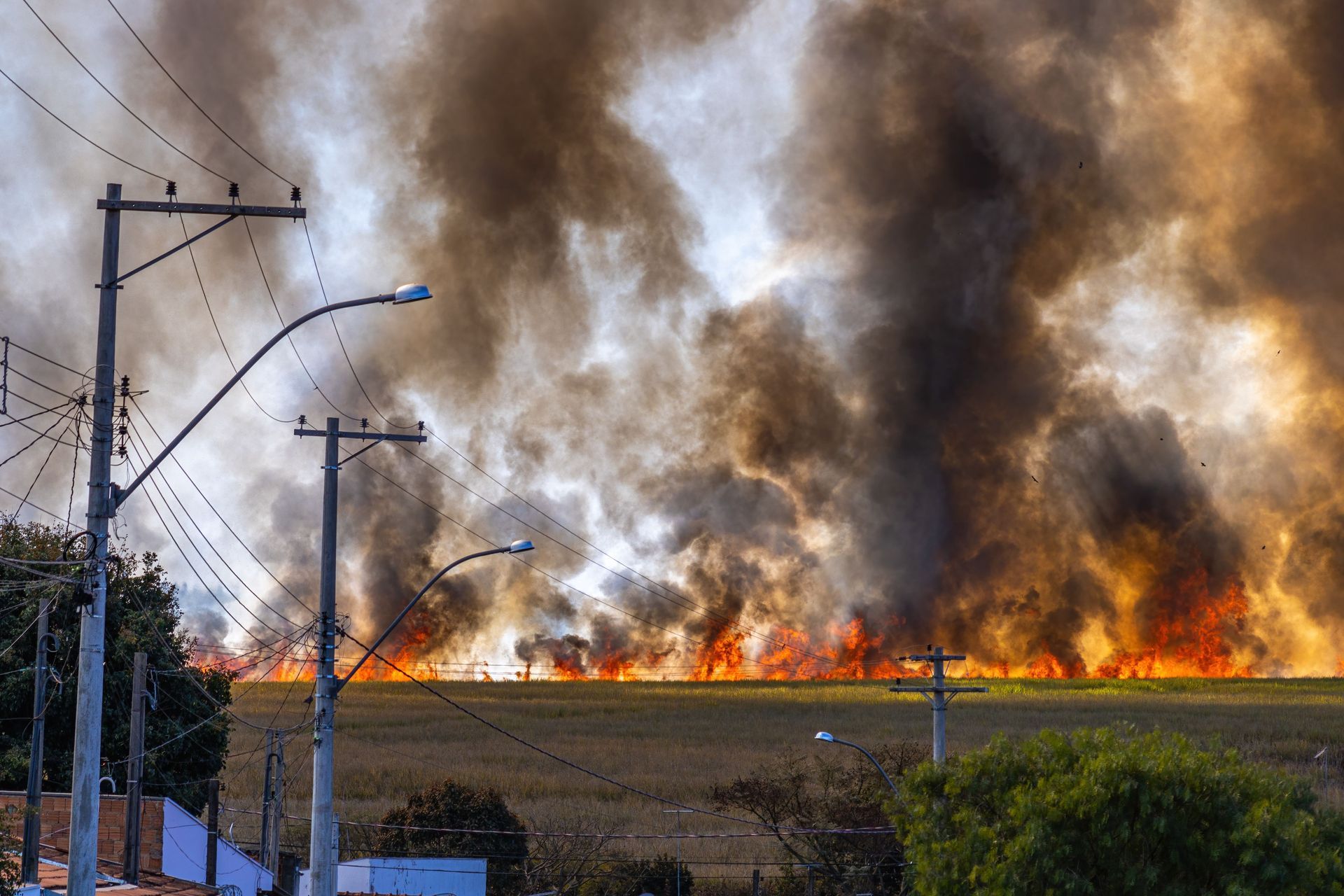
If you've gotten a letter from the county, seen your address flagged on Utah's wildfire risk map, or just heard neighbors talking about a new "wildfire fee," you're probably wondering if a bill is about to land in your mailbox. Utah did pass a wildfire mitigation fee for high-risk properties. Right now, in August 2026, you're not paying it.
Here's the short answer: not yet. Lawmakers pushed the fee's start date back a full year, from January 1, 2026 to January 1, 2027. That delay is easy to miss. Several sources online, including the state's own FAQ page, still list the old 2026 date. Below is what the fee actually is, why the start date moved, how much you'll owe once it kicks in, and what it means for your homeowners policy in the meantime.
What Is Utah's New Wildfire Fee, and Why Does It Exist?
House Bill 48, passed during Utah's 2025 legislative session, created a new fee for homes and businesses sitting in the state's highest wildfire risk zones.
The Utah Division of Forestry, Fire and State Lands (FFSL) administers the program using something called a Structure Exposure Score, or SES, a 1 to 10 scale that factors in ember-cast potential, slope, vegetation, and how close a structure sits to others. Buildings that score 7 or higher, and sit within 250 meters (about 820 feet) of two or more other structures, fall inside what the state calls the high-risk wildland-urban interface boundary, or high-risk WUI. Roughly 60,000 Utah structures, the top 95th percentile of risk statewide, currently sit inside that boundary.
Why bother with any of this? Utah homeowners insurance premiums climbed about 59% between 2021 and 2026, according to the Utah Office of the Legislative Fiscal Analyst. Industry reporting on the Utah market has also documented carriers declining or non-renewing policies in the state's highest-risk mountain and foothill communities, sometimes years before HB 48 even passed. HB 48 is lawmakers' attempt to get ahead of both problems at once, funding lot assessments and mitigation work through a new Utah Wildfire Fund instead of leaving homeowners to absorb rising premiums with no way to bring their risk score, or their bill, down.
This isn't just a homeowner issue, either. The fee applies to businesses sitting inside the high-risk boundary too, which matters if you own a shop, rental property, or commercial building in a foothill community. The same square-footage math applies regardless of whether the structure is residential or commercial.
When Does the Fee Actually Start?
January 1, 2027, not 2026.
HB 48 originally set a January 1, 2026 effective date. Governor Spencer Cox signed House Bill 41 in March 2026, which pushed that date back a full year. Bill sponsor Rep. Thomas Peterson, R-Brigham City, said the extra time gives cities and counties a chance to petition FFSL to amend the high-risk WUI map before anyone actually gets billed. That means specific neighborhoods or individual properties can be argued out of the high-risk boundary before the fee ever applies to them.
Practically, that makes 2026 a mapping and appeals year, not a billing year. If you're in a foothill community above Farr West, up around Heber Valley, or anywhere else the map currently flags as high-risk, this is the window to check your status and, if it's wrong, push back on it.
How Much Will You Pay, and How Do You Find Out If You're in the Zone?
Once the fee starts, expect somewhere between $20 and $100 per year, based on your structure's square footage.
For 2026 and 2027, the fee is a flat rate tied to square footage alone. Starting in 2028, it shifts to a more individualized number based on a certified lot, or triage, assessment combined with structure size. That's good news if you're willing to do the work: homeowners who complete mitigation, like clearing vegetation, creating defensible space, or upgrading to fire-resistant roofing materials, can lower what they owe once the assessment-based fee takes effect.
Counties collect the fee, most likely folded into your property tax bill, and pass it into the Utah Wildfire Fund, which pays for the lot assessments and mitigation work the program requires. Worth being clear about what the fee is not: it's not a penalty, and it's not designed to cover statewide wildfire suppression costs. It funds the assessment and mitigation side of the program specifically.
To find out if your property is in the zone, check your address on Utah's Wildfire Risk Assessment Portal (UWRAP) at wildfirerisk.utah.gov once the finalized high-risk boundary is published there. You can also request an official lot assessment through FFSL or hire a certified private assessor. Skipping the assessment doesn't get you out of the fee. Properties that opt out are automatically assumed to carry the highest risk and get charged the top fee amount, so there's no upside to ignoring it.
If you think your property landed in the high-risk boundary by mistake, or your score doesn't reflect work you've already done, FFSL has confirmed an appeals process is coming, defined through administrative rules the state is still finalizing. Until that process is public, the map-amendment window cities and counties are using this year is your best shot at getting a property reconsidered.
Once the assessment-based fee arrives in 2028, a handful of concrete steps lower a Structure Exposure Score: clearing vegetation and debris within the defensible space zone immediately around the structure, replacing wood shake or shingle roofing with fire-resistant material, screening attic, soffit, and foundation vents to block ember entry, keeping gutters clear of dry leaves and pine needles, and maintaining spacing between trees, shrubs, and the structure itself.
None of this is required to get the 2026-2027 flat fee, since that's based on square footage alone. It becomes worth doing once the individualized 2028 fee, and your insurance premium, start reflecting your actual risk score.
What This Means for Your Homeowners Insurance
HB 48 doesn't just create a fee. It changes how insurers evaluate your property, too.
The law requires carriers writing homeowners policies in Utah to use the state's new high-risk WUI boundary when assessing wildfire risk. It also requires insurers to disclose when they raise a premium more than 20% or discontinue coverage altogether, and it sets up data sharing between the state, insurers, and homeowners so everyone is working from the same risk picture instead of homeowners guessing why a renewal jumped.
That matters because wildfire risk has already pushed some carriers to tighten what they'll write in Utah's mountain and foothill communities. If your home sits in or near a high-risk WUI zone, a non-renewal or a steep premium increase from your current carrier doesn't mean you're out of options. It usually means it's time to shop the policy across multiple carriers, since risk appetite for wildfire-prone properties varies a lot from one insurer to the next. One company might decline a property outright over its SES score, while another prices it fairly once they see the same assessment data. Exact renewal terms and pricing depend on your specific carrier and property, so ask your agent for the details on your policy.
That's the practical difference between working with a single-carrier agent and an independent one. A captive agent can only offer you what their one company decides to do with a high-risk score. An independent agency checks that score against several carriers' actual appetite for wildfire risk and finds the one still willing to write fair coverage, instead of leaving you stuck with a non-renewal notice and nowhere else to go.
Frequently Asked Questions
Q: How much is Utah's wildfire mitigation fee?
A: Between $20 and $100 per year for 2026 and 2027, based on the square footage of structures on the property. Starting in 2028, the fee shifts to a formula based on an individual lot assessment plus structure size.
Q: When does Utah's wildfire fee start?
A: January 1, 2027. House Bill 41, signed in March 2026, pushed the original January 1, 2026 start date back a full year.
Q: Can I opt out of the wildfire risk assessment?
A: Yes, but opting out doesn't lower your fee. Properties that skip the assessment are automatically classified at the highest risk level and charged the top fee amount.
Q: Does the wildfire fee affect my homeowners insurance premium?
A: Not directly, but HB 48 requires Utah insurers to use the new high-risk WUI boundary when evaluating wildfire risk and to disclose it when they raise a premium more than 20% or drop a policy, so the two are closely connected.
Q: How do I find out if my property is in the high-risk WUI zone?
A: Check your address on Utah's Wildfire Risk Assessment Portal (UWRAP) at wildfirerisk.utah.gov, or contact the Division of Forestry, Fire and State Lands directly.
The Bottom Line
Utah's wildfire fee is real, but it isn't billing anyone yet. If your property sits in a high-risk WUI zone, the smartest move for the rest of 2026 is to check your Structure Exposure Score, start any mitigation work that could lower your future fee, and take a close look at your homeowners policy before a renewal catches you off guard. Rules like this tend to move insurance decisions right along with them.
Have questions about how Utah's wildfire fee or the new WUI risk maps affect your homeowners policy? Our team at The Insurance Center is here to help. Call us at (801) 622-2626.
About the Author: Jett Iverson is the Director of Marketing at The Insurance Center, an independent insurance agency serving Northern Utah since 1994. He works alongside licensed agents to help Utah families and businesses understand their coverage options and make confident insurance decisions.
Contact The Insurance Center
Get A Quote
At The Insurance Center, securing your future is easy. Ready to protect what matters? Contact us for a quick quote and personalized insurance options!
Personal Insurance
From auto and homeowners to renters and umbrella policies, we help protect your family and property. Let’s find coverage that fits your life.
Commercial Insurance
We customize policies for your industry's risks, like general liability and workers' comp, ensuring you can run your business worry-free.
Recent Posts